
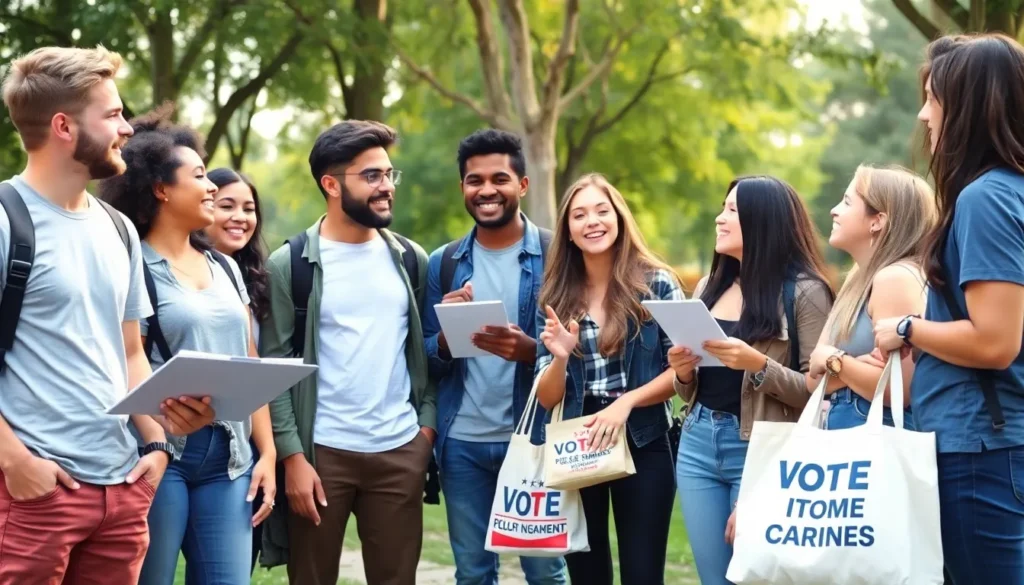
Voting is one of those adult responsibilities that can feel like a chore, but skipping it might cost more than just a missed opportunity to voice an opinion. In some places, not casting a ballot can lead to a fine that’ll make you reconsider your Netflix binge. Imagine getting hit with a bill for not participating in democracy—talk about a plot twist!
Understanding Voting Requirements
Voting remains a civic duty. In many jurisdictions, individuals must register before casting their ballots. Registration often involves providing personal details like name, address, and date of birth. Some areas allow same-day registration, while others require registration weeks in advance.
Eligibility criteria vary. Most states require voters to be at least 18 years old by election day. U.S. citizenship is essential, and residents must meet local residency requirements. Some states impose restrictions based on felony convictions, which can affect voting rights.
Failure to vote may incur fines in certain regions. States like Australia impose mandatory voting laws, causing noncompliant voters to face penalties. In the U.S., however, most states do not charge fines for not participating, although local regulations may differ.
Understanding the implications of not voting is important. Individuals who avoid the ballot may contribute to reduced representation in government. Decisions made by elected officials shape communities and influence issues directly affecting citizens’ lives. Engaging in elections ensures that voices reflect community needs.
Knowing when and where to vote is crucial. Polling locations and hours vary, and maintaining awareness of these details helps ensure participation. Voters should check registration deadlines and be aware of any identification requirements.
Staying informed about local, state, and federal elections enhances civic engagement. Many resources are available online to assist in understanding voting processes. Utilizing official state websites or local election offices can provide the necessary guidance and information.
Financial Penalties for Non-Voting
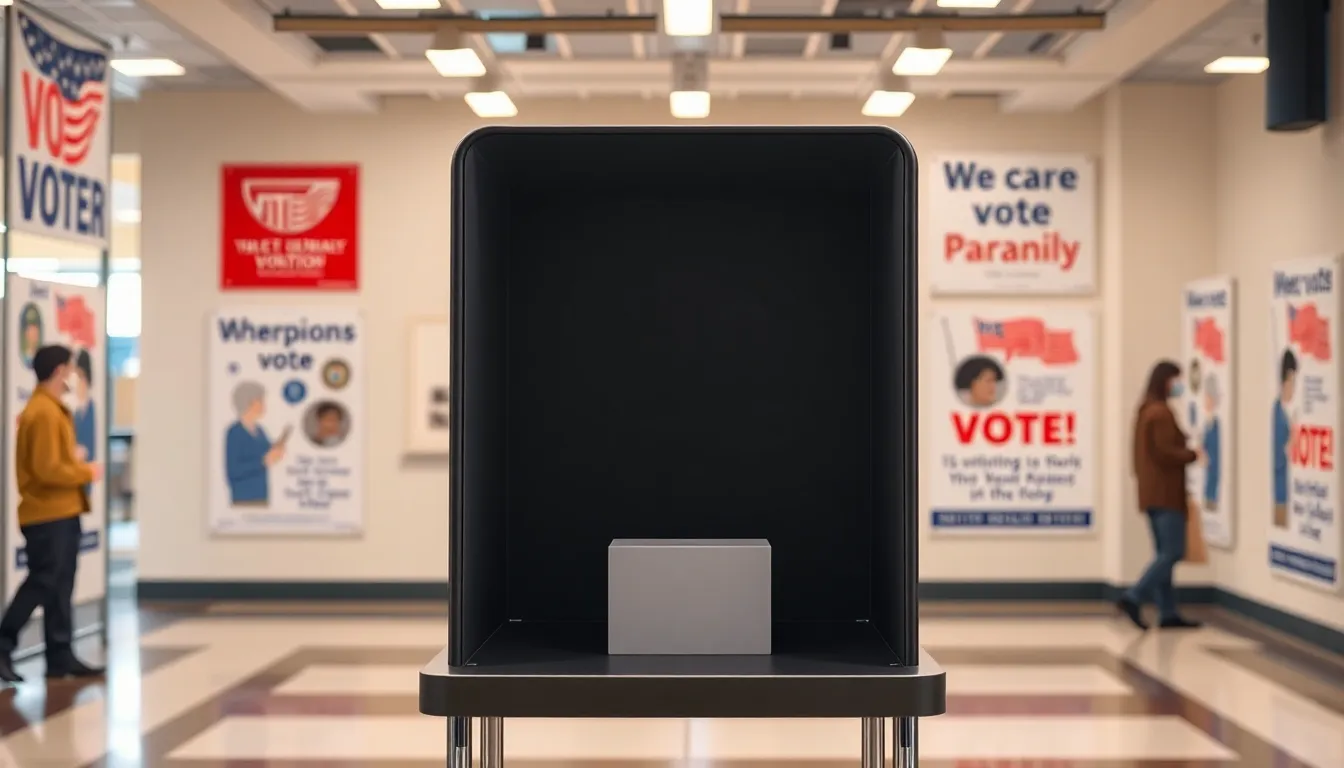
Understanding the financial penalties for not voting is essential for citizens concerned about civic duty. Fines do exist, but their prevalence varies widely across the United States.
Overview of Fines
Financial penalties for failing to vote primarily arise in places with mandatory voting laws. Australia, for instance, imposes fines for non-voters, creating a strong incentive to participate in elections. However, in the U.S., such laws are rare. Most states do not levy fines for simply not participating in elections. Some local jurisdictions may implement minor penalties or fees, though those instances are uncommon. The focus remains on encouraging civic engagement rather than punishing noncompliance.
Variations by State
Variations among states in terms of non-voting penalties are significant. Some states actively promote civic engagement without financial repercussions, while others implement strategies to encourage participation through alternative methods. In states like Arkansas and Maine, voters can face consequences like being removed from voter rolls if they fail to participate in consecutive elections. However, monetary fines remain largely absent. States such as Texas provide reminders but do not impose fines. Thus, knowing local laws is crucial for understanding potential consequences associated with non-voting.
Consequences Beyond Financial Fines
Voting carries more than just financial implications. Civic duties extend beyond casting a ballot, influencing how government functions and represents constituents. Participating in elections strengthens democracy. When individuals neglect their responsibilities, representation suffers. Communities may face policies that don’t align with their needs, leading to decisions made without their input. Staying active in the voting process fosters healthier governance and reflects collective values.
Civic Responsibilities
Civic responsibilities emerge as crucial elements in maintaining democracy. Engaging in elections ensures that citizens’ voices are heard. Moreover, participation enables individuals to advocate for issues that matter most to them. Unsurprisingly, a decline in voter turnout can lead to diminished political engagement, perpetuating a cycle of disinterest. Each vote contributes to the broader community narrative, influencing local and national governance. Fulfilling civic duties cultivates informed citizens who actively participate in shaping their society.
Potential Legal Ramifications
Legal challenges may arise from failing to fulfill voting obligations. Some states enforce strict voter registration laws, risking removal from voter rolls for those who don’t participate in elections. Such actions can create barriers for future voting opportunities. Individuals may also face difficulties regarding voter ID requirements and eligibility confirmation. Staying informed about local laws becomes essential for avoiding potential complications. Understanding the legal framework surrounding elections ensures that citizens can participate without obstacles.
Myths and Misconceptions
Many people believe failing to vote always results in a fine. While this notion has some basis in regions with mandatory voting, such as Australia, it doesn’t hold true for the majority of U.S. states. Most states lack any penalties for choosing not to participate in elections.
Some assume that not voting leads to immediate legal repercussions. However, in most instances, the consequences are limited to civic aspects rather than legal penalties. Individuals may find themselves removed from voting rolls in certain jurisdictions if they miss multiple elections, but this isn’t a universal rule.
Others think that fines serve as a motivation to vote. It’s crucial to note that financial penalties are relatively rare in the U.S. Voting often relies on personal responsibility and civic duty rather than fear of being fined. Community engagement and awareness play vital roles in encouraging participation.
The misconception persists that all states enforce strict voting laws. Various states adopt different approaches, focusing either on encouraging participation or maintaining voter rolls. Understanding local regulations fosters informed decision-making and better participation rates.
Some believe that even minor local penalties are commonplace. In reality, such fines are infrequent and not uniformly applied across localities. Most often, local governments prioritize creating an inclusive environment over penalizing non-voters.
People frequently assume that missing one election will lead to serious long-term consequences. The reality indicates that occasional non-participation doesn’t usually jeopardize future voting rights. Staying informed about local laws can ensure continued eligibility for future elections.
Understanding the implications of not voting is crucial for every citizen. While financial penalties for failing to vote are rare in the U.S., the consequences of disengagement can be significant. Lack of participation can lead to reduced representation and policies that don’t reflect the community’s needs.
Staying informed about local voting laws and engaging in the electoral process strengthens democracy. Each vote matters and contributes to shaping a society that aligns with the values and priorities of its constituents. Emphasizing civic responsibility and awareness can motivate individuals to participate actively in elections, ensuring their voices are heard and their rights are upheld.