
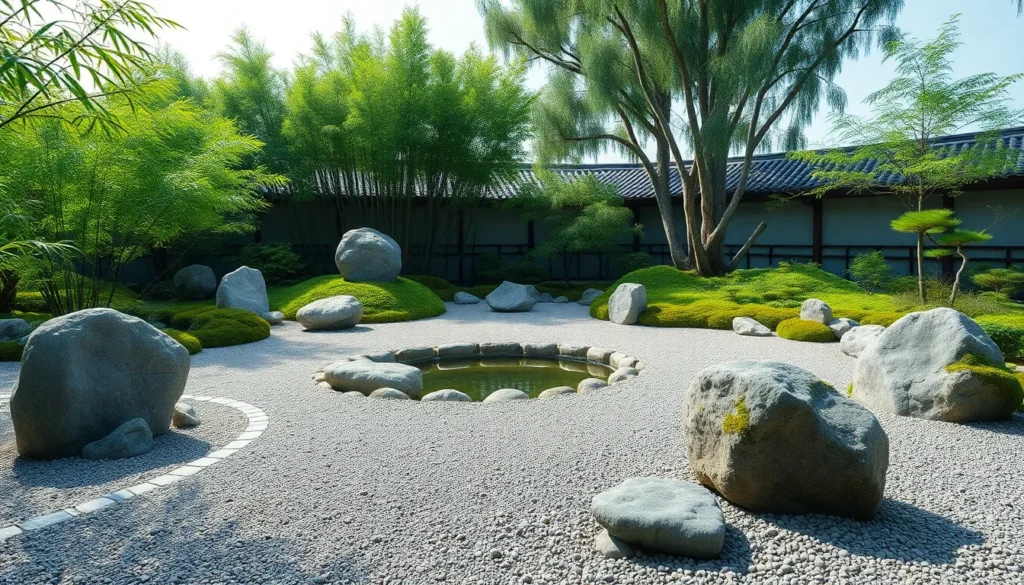
Zen garden design offers a tranquil escape from the chaos of everyday life. With its roots in Japanese culture, these gardens emphasize simplicity and harmony, creating a space for reflection and meditation. Each element, from carefully placed rocks to meticulously raked gravel, serves a purpose, inviting a sense of peace and mindfulness.
Creating a Zen garden isn’t just about aesthetics; it’s about fostering an environment that encourages relaxation and introspection. Whether one has a sprawling yard or a small balcony, incorporating Zen principles can transform any space into a serene oasis. Discovering the art of Zen garden design can lead to a deeper understanding of nature and oneself, making it a rewarding endeavor for anyone seeking balance and tranquility.
Overview of Zen Garden Design
Zen garden design, rooted in Japanese culture, promotes simplicity and harmony. Each element in a Zen garden serves a specific purpose, enhancing the overall sense of peace and mindfulness.
Key Elements of Zen Gardens
- Rocks: Represent mountains or islands, anchoring the garden’s design and symbolizing stability and permanence.
- Gravel or Sand: Represents water, providing a canvas for raking patterns that signify waves or rippling water.
- Plants: Use minimalistic planting to maintain the garden’s serene aesthetic, typically incorporating hardy species that require little maintenance.
- Bridges and Pathways: Create movement throughout the garden, guiding visitors and symbolizing a journey toward enlightenment.
Design Principles
- Simplicity: Maintain a clean and uncluttered space, allowing for contemplation and reflection.
- Balance: Achieve harmony among various elements, ensuring that no single component overwhelms the others.
- Asymmetry: Embrace irregularity in layout, echoing natural landscapes and promoting a sense of spontaneity.
Purpose and Benefits
Engaging in Zen garden design fosters relaxation and introspection, inviting individuals to connect with nature and themselves. The process of creating and maintaining a Zen garden can enhance mindfulness, providing a serene environment that encourages personal growth and mental clarity. This design approach transforms spaces into tranquil retreats, creating an oasis that cultivates balance and tranquility.
Key Elements of Zen Gardens
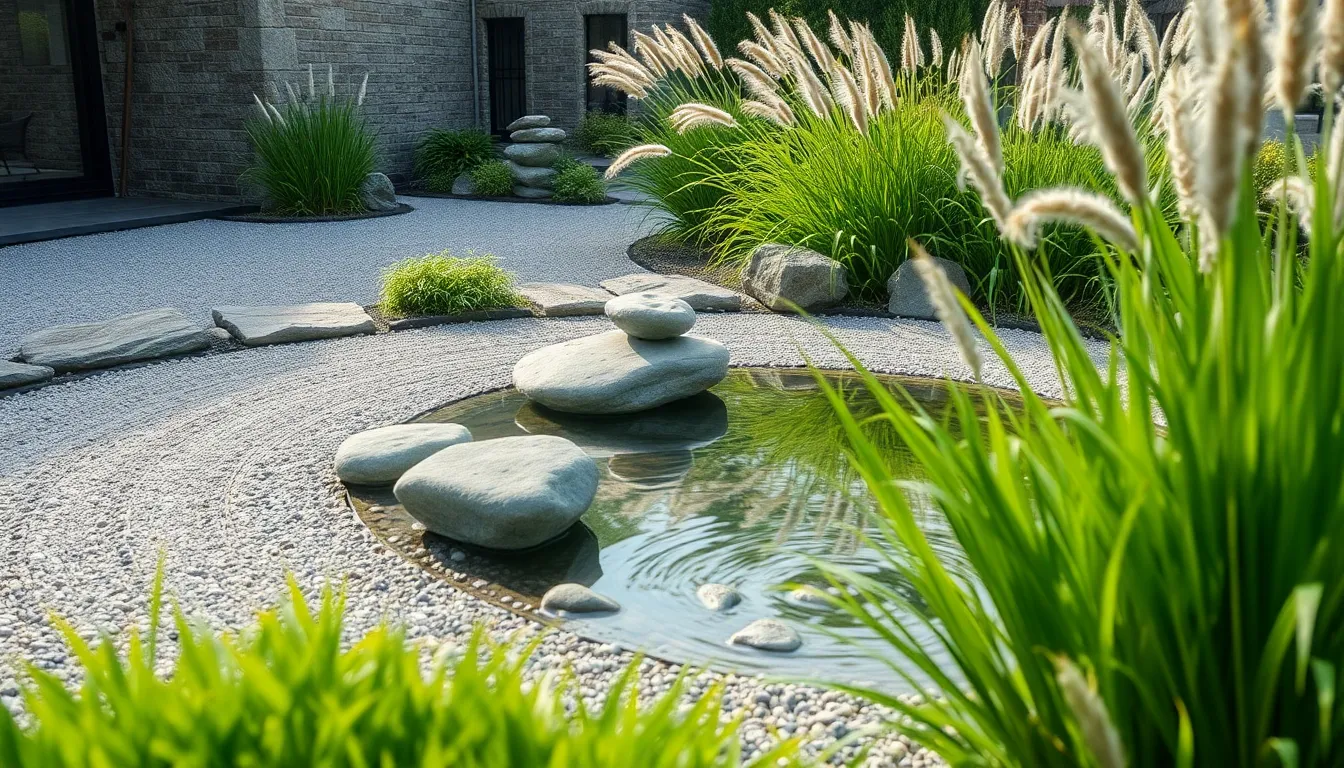
Zen gardens consist of several essential elements that foster a sense of peace and balance. Understanding these components enhances the garden’s purpose and aesthetic.
Stones and Gravel
Stones and gravel serve as foundational elements in Zen gardens. Stones symbolize strength and permanence, often placed strategically to create focal points. Gravel represents flowing water, meticulously raked into patterns to evoke tranquility. The arrangement of these materials contributes to the overall harmony, with varying sizes and colors adding depth and interest.
Plants and Shrubs
Plants and shrubs add subtle life to Zen gardens while maintaining a minimalistic approach. Common choices include moss, bamboo, and ornamental grasses, which thrive in low-maintenance conditions. These plants provide texture and softness, contrasting with the hard surfaces of stones and gravel. Placement follows principles of asymmetry, ensuring a balanced yet natural look that invites contemplation.
Water Features
Water features introduce an element of calmness and reflection in Zen gardens. Options range from small ponds to trickling streams and stone basins. The sound of water creates a soothing atmosphere, enhancing relaxation. The reflective nature of water also symbolizes purity and clarity, aligning with Zen principles. Incorporating such features can transform a garden into a serene sanctuary.
Design Principles
Zen garden design rests on foundational principles that cultivate a peaceful and reflective atmosphere. Key concepts include balance, harmony, simplicity, and minimalism.
Balance and Harmony
Balance and harmony create a cohesive environment in Zen gardens. Designers often use asymmetry to achieve visual interest while maintaining overall equilibrium. For instance, placing larger stones on one side, complemented by smaller pebbles or plants on the opposite side, establishes a sense of stability without overwhelming the eye. Aligning elements such as rocks and gravel patterns allows the garden to evoke a natural flow, steering attention to various focal points throughout the space. Incorporating diverse materials and colors enhances the overall harmony, ensuring each element serves its intended purpose while contributing to a serene landscape.
Simplicity and Minimalism
Simplicity and minimalism characterize Zen garden design. The objective is to use fewer elements to create a lasting impact. Essential materials like gravel, rocks, and select plant species manifest this approach. For example, a single stone arrangement can symbolize mountains or islands, rather than overcrowding the space with several competing elements. Keeping the garden layout uncluttered invites mindfulness and contemplation, encouraging individuals to engage fully with their surroundings. Each chosen component should reinforce tranquility, enabling a deeper connection to nature while fostering an atmosphere of peace and introspection.
Benefits of Zen Garden Design
Zen garden design offers various advantages that enhance both physical spaces and mental well-being.
- Promotes Relaxation
Zen gardens create serene environments that encourage relaxation. The arrangement of elements fosters a peaceful atmosphere, allowing individuals to unwind after a stressful day.
- Encourages Mindfulness
Engaging with a Zen garden promotes mindfulness practices. The simplicity and minimalism of the garden encourage individuals to observe their surroundings, facilitating deeper connections with nature.
- Enhances Aesthetic Appeal
Visually stunning, Zen gardens elevate the aesthetic of outdoor and indoor spaces. Carefully arranged rocks, gravel, and plants offer harmony that enhances property appeal.
- Provides a Space for Reflection
Zen gardens serve as tranquil spaces for contemplation. The calming visuals and sounds cultivate an environment conducive to introspection and personal growth.
- Facilitates Connection with Nature
By integrating natural elements, Zen gardens foster a stronger connection with the environment. Observing the garden’s features enhances appreciation for nature’s simplicity and beauty.
- Supports Stress Reduction
The tranquility of Zen gardens significantly reduces stress levels. Studies indicate that exposure to natural settings leads to lower cortisol levels, promoting overall mental health.
- Encourages Creativity
Engaging with the design of a Zen garden stimulates creativity. The process of selecting and arranging elements invites innovative thinking and personal expression.
- Promotes Physical Activity
Designing and maintaining a Zen garden involves physical tasks, encouraging outdoor activity. Gardening can improve physical health, increase mobility, and boost mood.
- Fosters Spiritual Growth
Zen gardens often symbolize deeper spiritual concepts. Their design invites contemplation on themes such as impermanence, balance, and harmony, promoting a sense of inner peace.
- Increases Property Value
Well-designed Zen gardens can enhance property value. Potential buyers often seek homes with aesthetically pleasing and tranquil outdoor spaces.
These benefits collectively contribute to a more balanced and fulfilling lifestyle. Adopting Zen garden design principles can transform any space into a restorative sanctuary.
Maintenance Tips for Zen Gardens
Maintaining a Zen garden ensures its tranquility and beauty throughout the seasons. Regular upkeep helps preserve the garden’s serene atmosphere. Here are key maintenance tips:
- Rake Gravel: Raking gravel maintains patterns that symbolize rippling water. Regular raking, at least once a week, keeps the surface smooth and visually appealing.
- Prune Plants: Pruning plants keeps growth controlled and maintains a minimalist aesthetic. Target overgrowth, aiming to enhance the overall balance while ensuring plants stay healthy.
- Remove Debris: Cleaning out leaves, twigs, and other debris prevents clutter and maintains a clear space for meditation. A bi-weekly clean-up ensures a pristine environment.
- Inspect Stones: Inspecting stones for stability prevents shifting and maintains the garden’s intended design. Attend to stones that may have moved, repositioning them as needed.
- Check Water Features: Ensuring water features function properly promotes their calming effects. Clean filters and monitor water levels regularly to maintain optimal conditions.
- Control Weeds: Weeding sustains the minimalistic nature of Zen gardens. Execute weeding strategies at least monthly to keep unwanted plants from detracting from the garden’s beauty.
- Mulch Around Plants: Applying mulch around designated areas suppresses weeds and maintains soil moisture. Choose organic mulches to enhance biodiversity while blending naturally with the garden’s style.
- Mindful Reflection: Engage in mindful reflection during maintenance tasks. Approach each activity as a meditative process, fostering a deeper connection to the garden and enhancing overall mindfulness.
These maintenance practices keep the Zen garden aligned with its core principles, ensuring it remains a peaceful retreat for reflection and relaxation. Adopting these tips leads to a more harmonious experience with the garden’s intended design.
Zen garden design offers a unique pathway to tranquility through its thoughtful arrangement of natural elements. By embracing simplicity and harmony, individuals can create a serene environment that encourages mindfulness and reflection. The careful selection of stones, gravel, and plants not only enhances aesthetic appeal but also fosters a deeper connection with nature.
Maintaining a Zen garden requires a mindful approach that reinforces its core principles. Regular upkeep ensures that the space remains a peaceful sanctuary for introspection and relaxation. Ultimately, engaging with Zen garden design transforms any outdoor space into a restorative oasis, enriching the lives of those who seek balance and peace.